Interbody
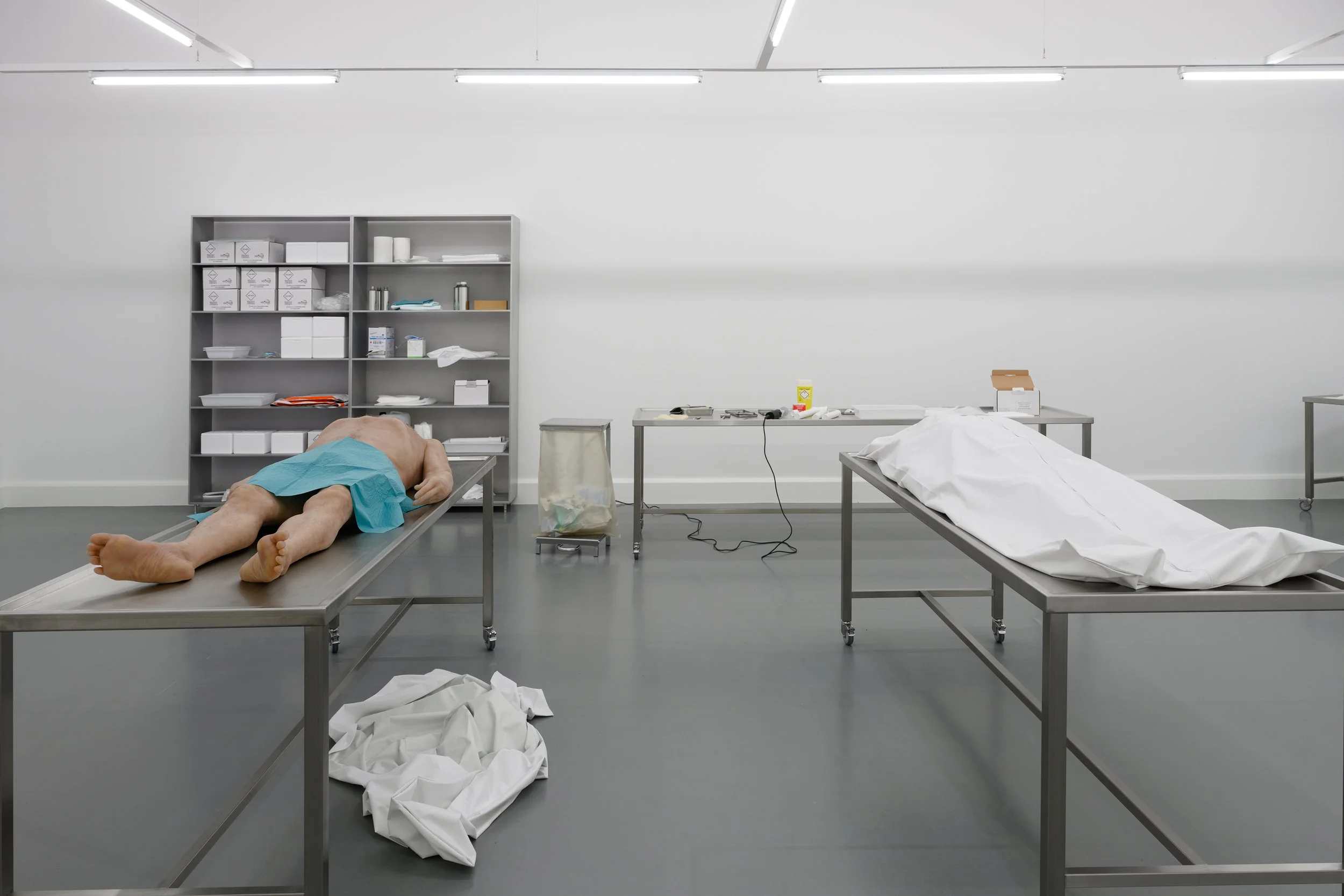
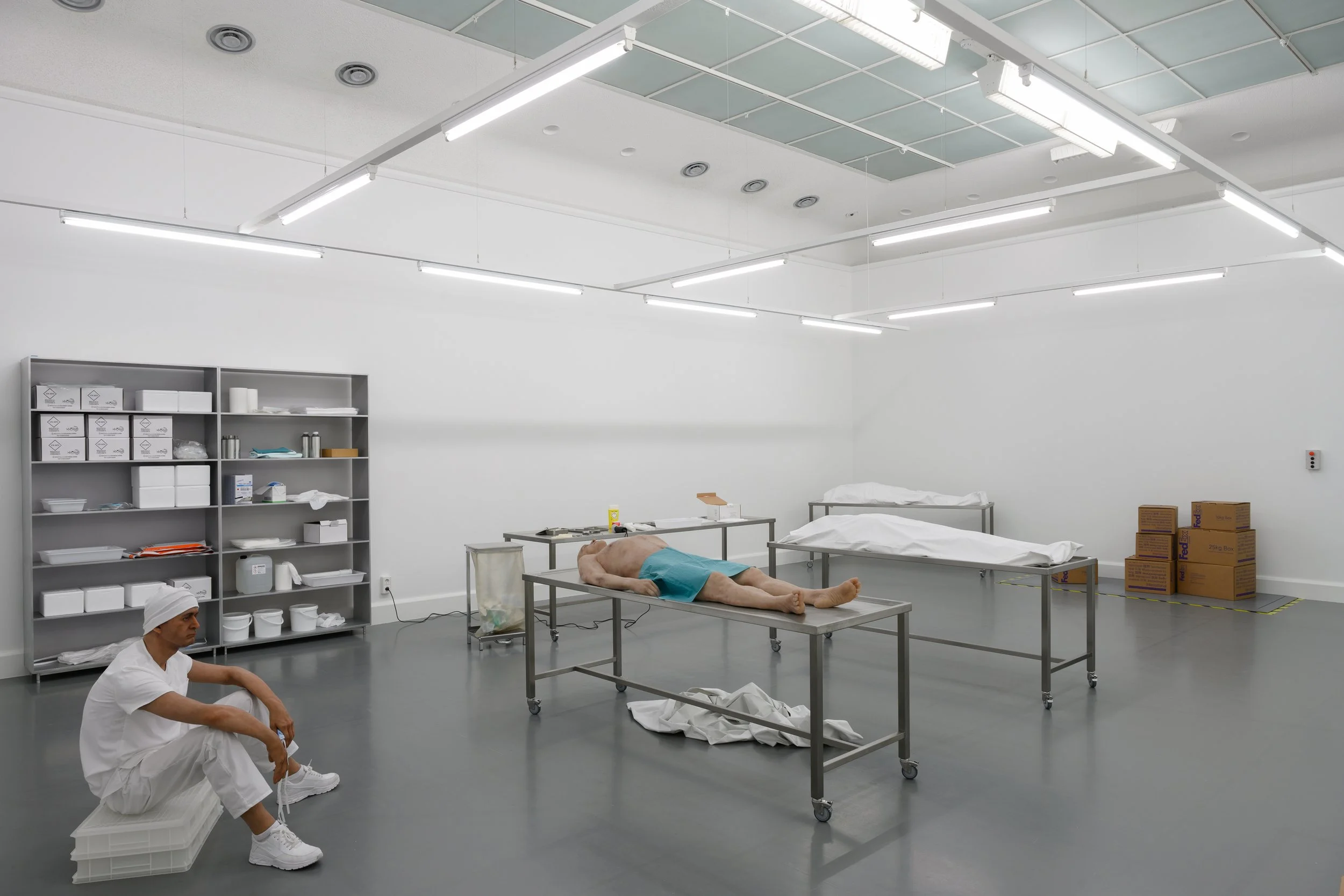
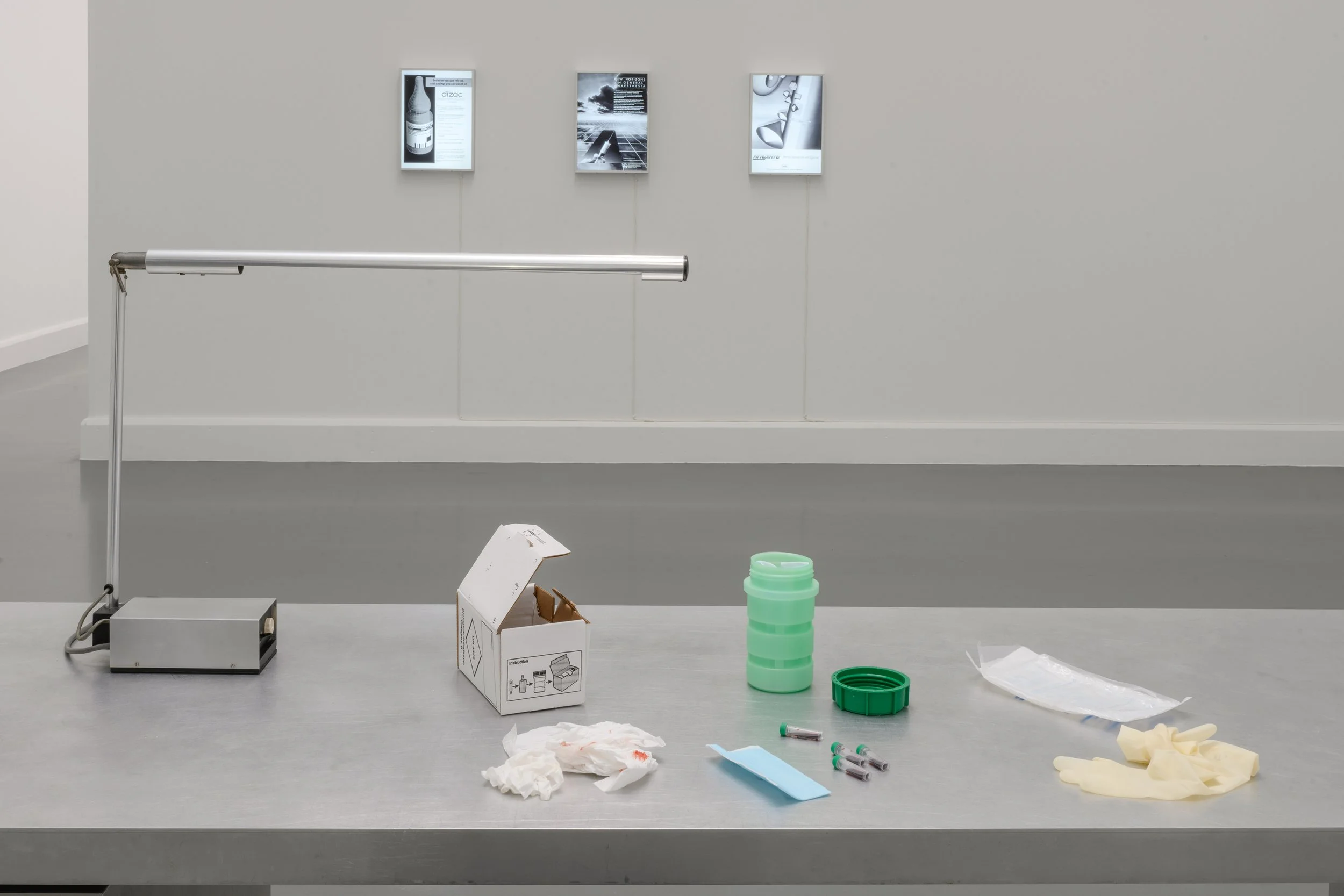
This work investigates the technological transformation of the body, the intermediate state between human and post-human. Departing from socio-documentary material following the disclosure of Mastronarino's medical crimes, Interbody approaches the blurred line between humanism and dehumanism.
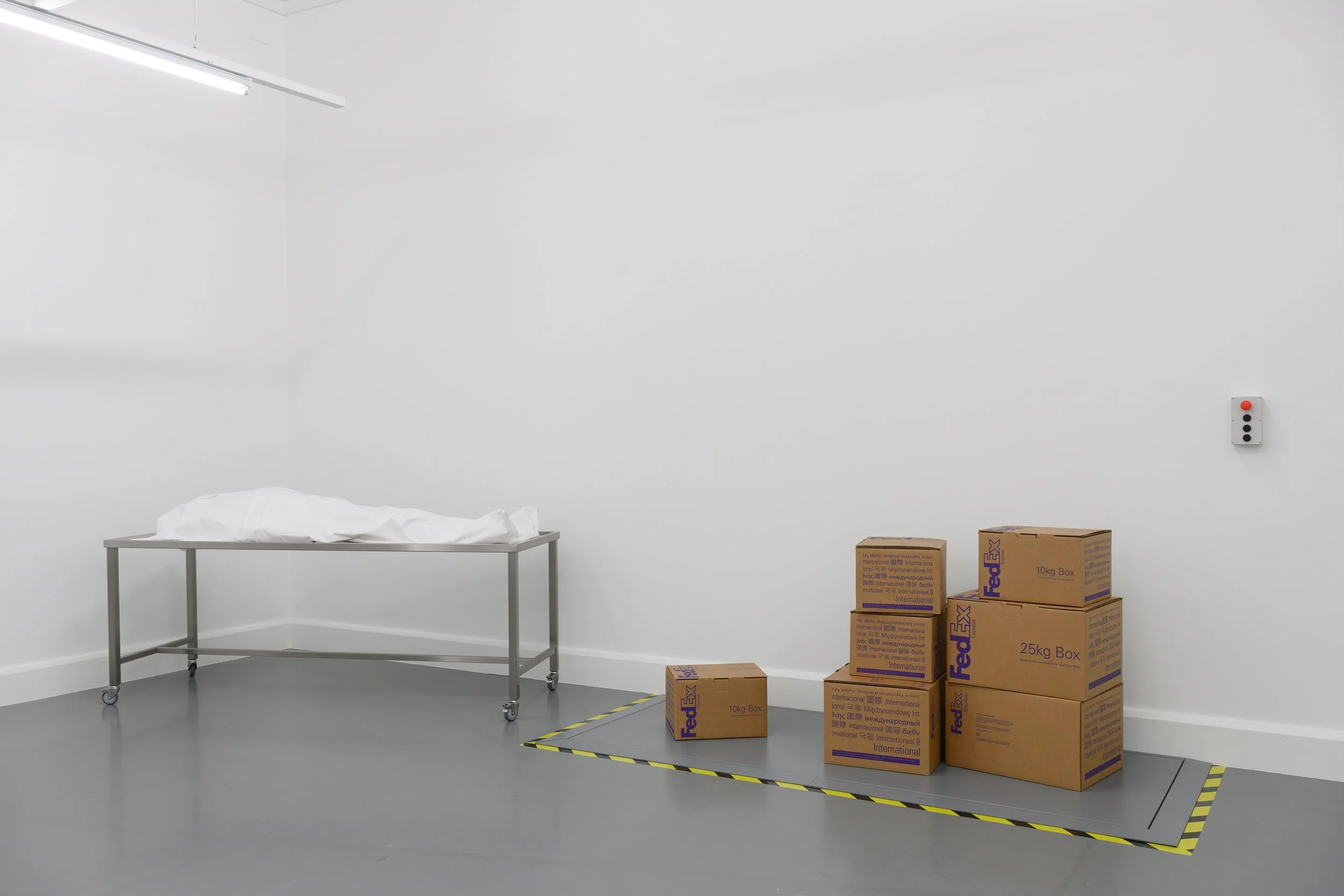
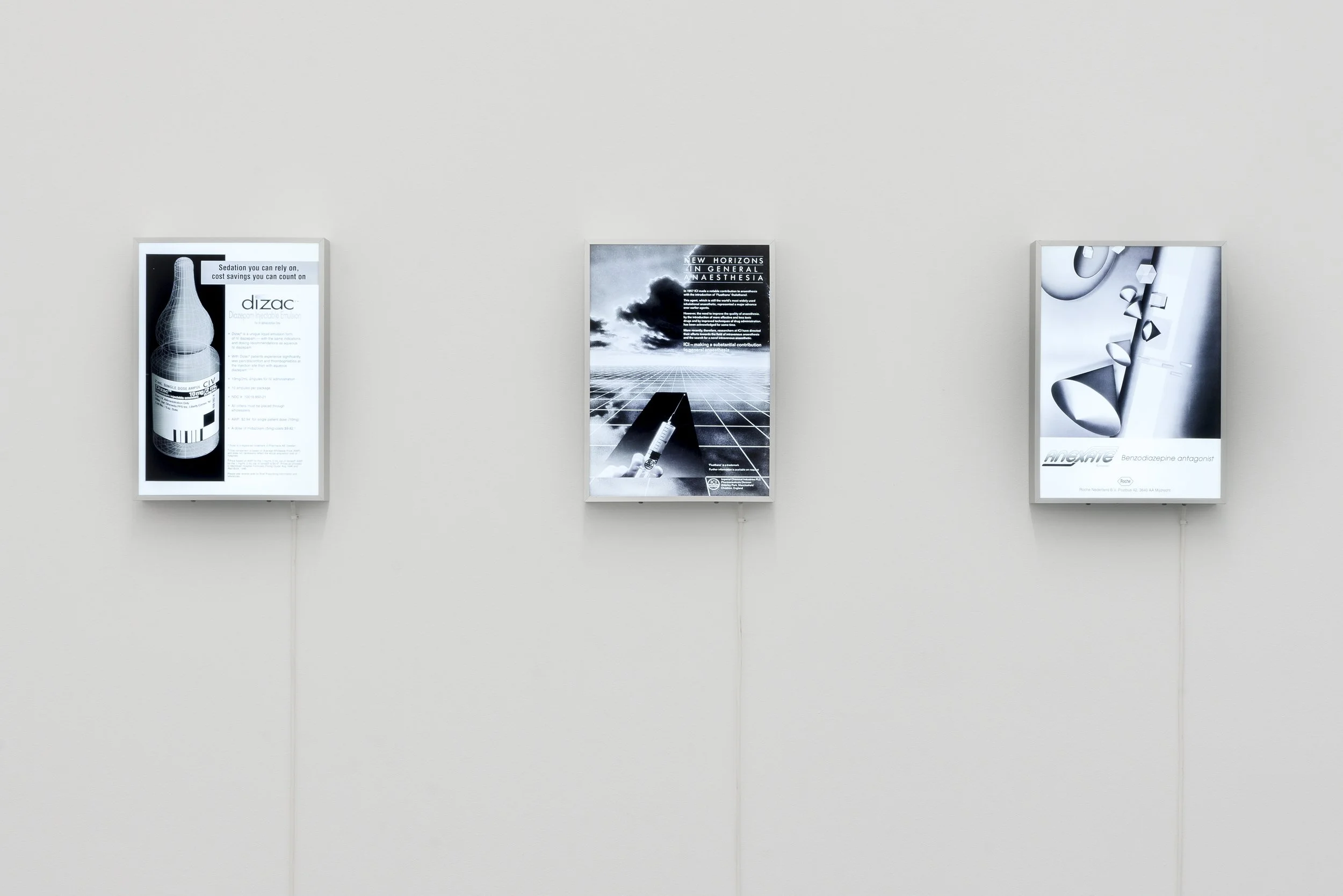
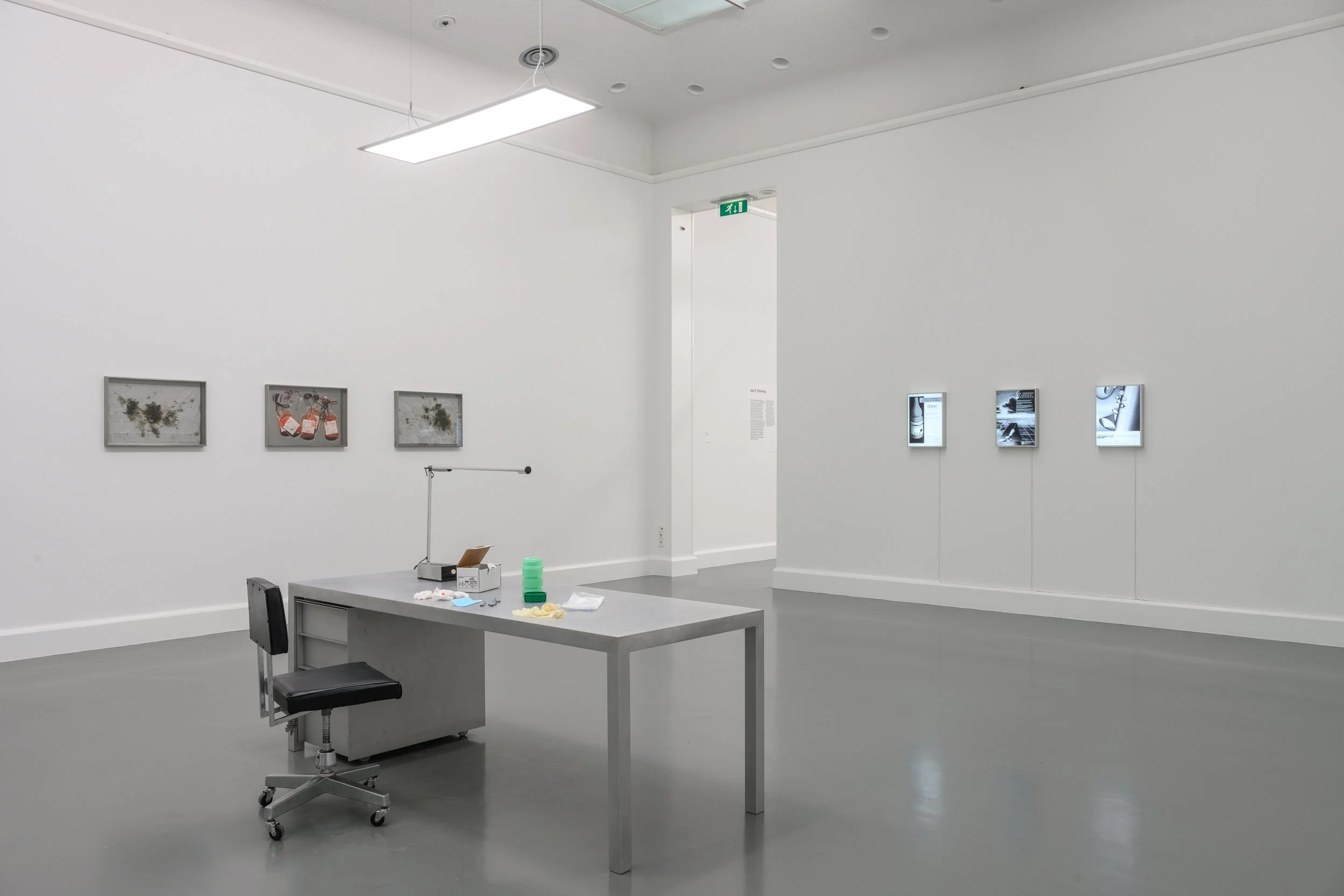
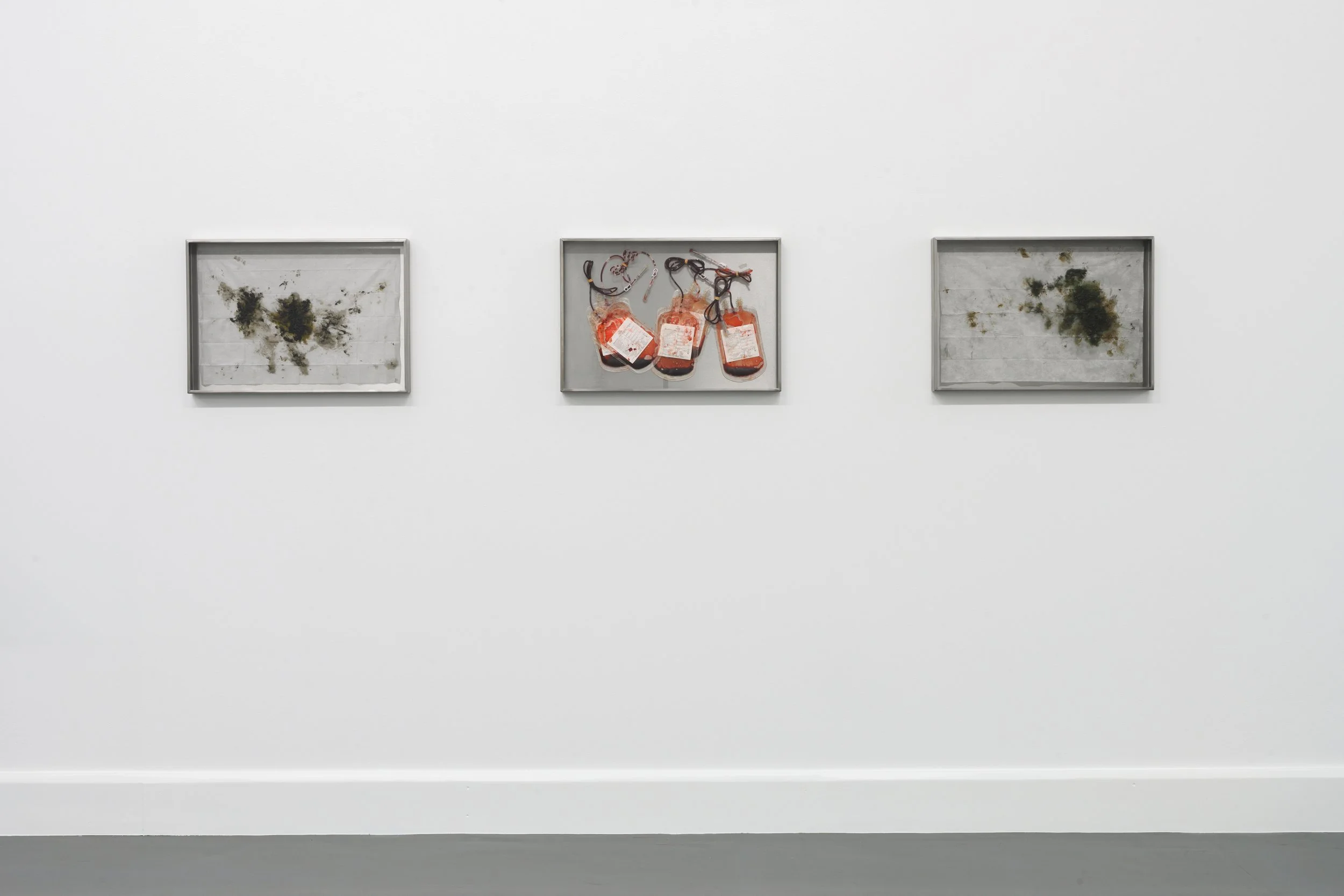
The title refers to a specific "spinal" bone graft, an intermediate body that has fused to the recipient's anatomy. Within the installation, this concept expands to reveal a multi-layered physical reality: biomedical products, falsified medical records, blood samples, spinal injury, opioid addiction, and metastasized bone cancer.
The work is grounded in investigative research across multiple source types: documentary sources written and filmed materials documenting the Mastronarino case, geolocation analysis to pinpoint the laboratory location based on descriptive accounts, and archival reconstruction from available visual documentation.
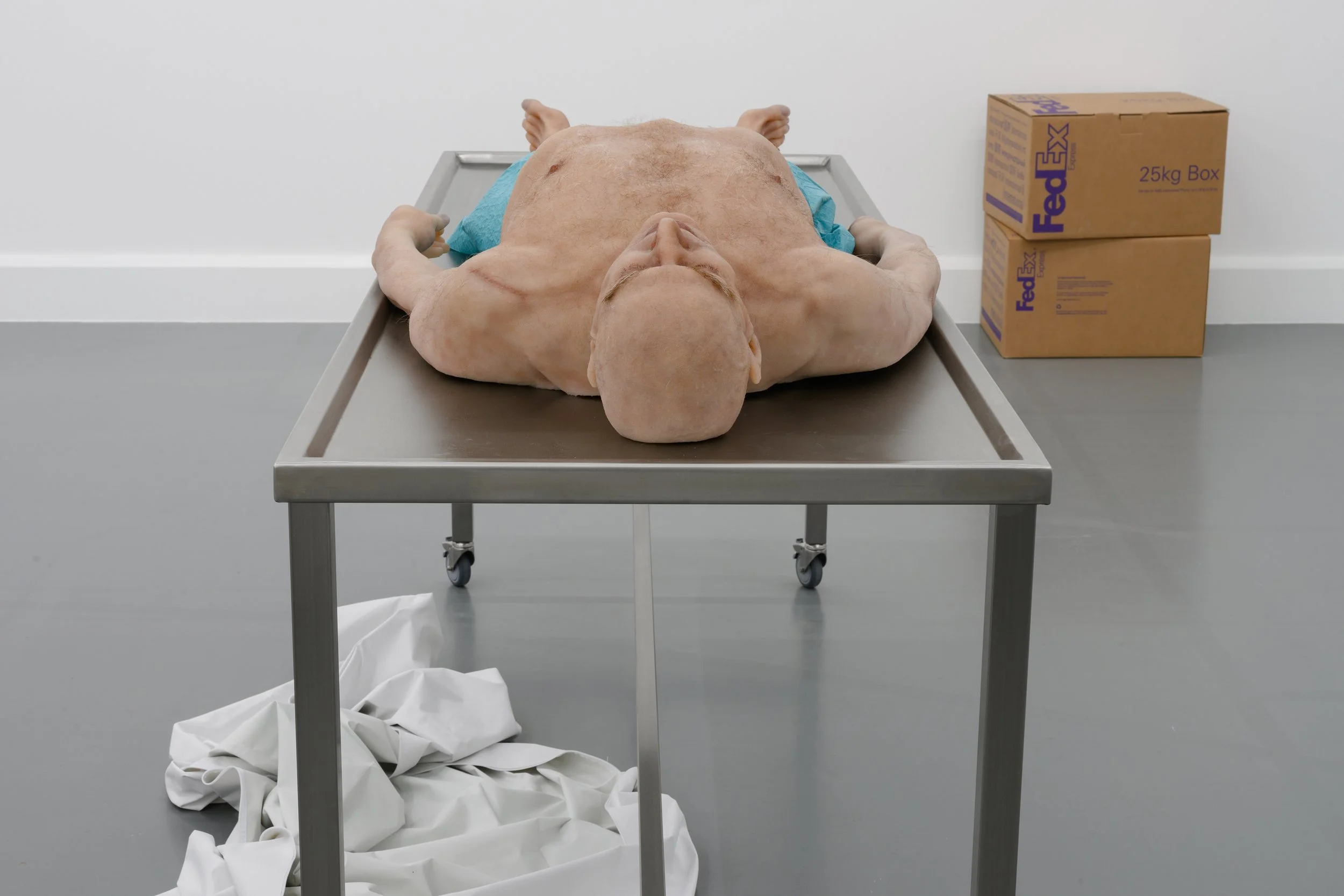
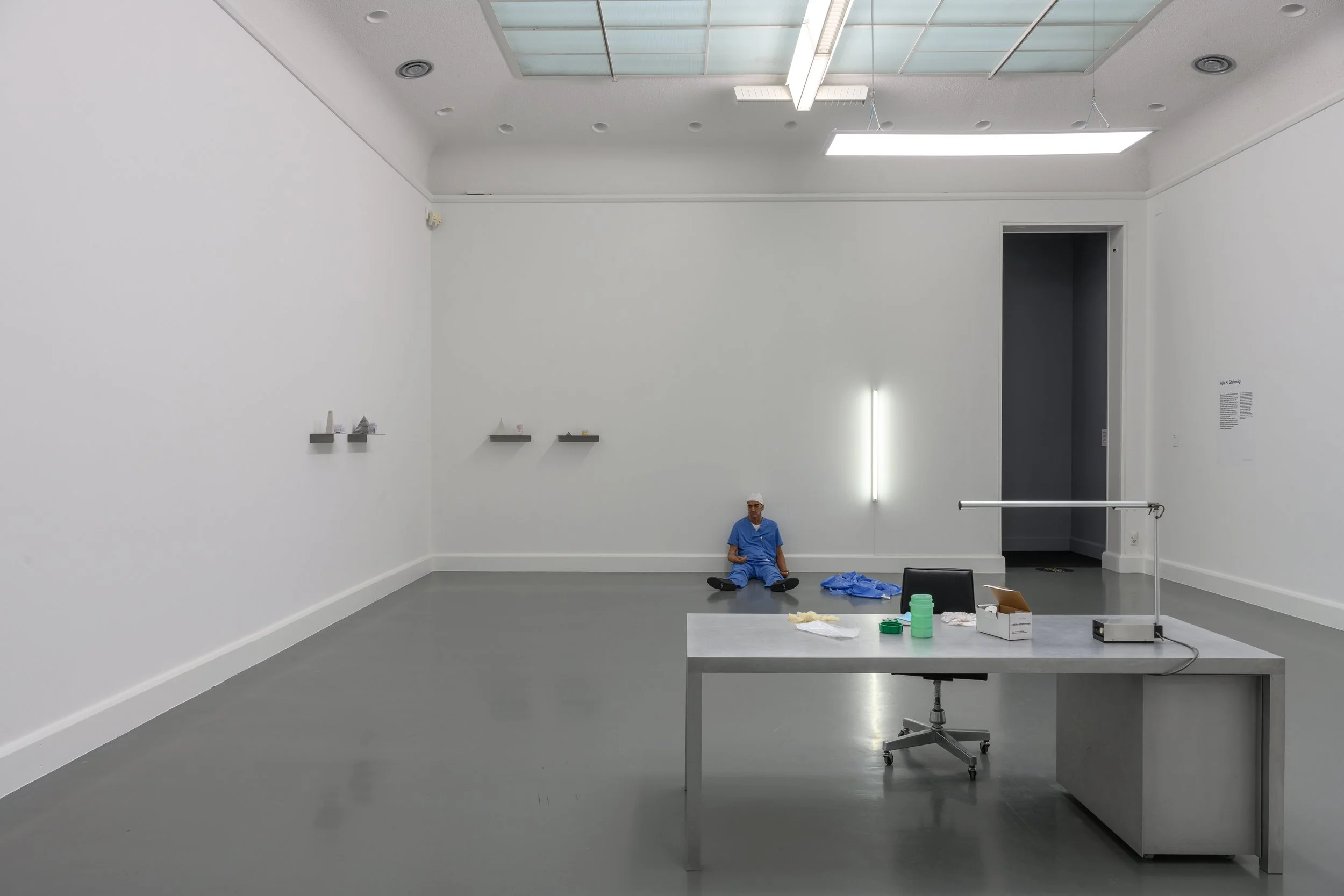
The installation employs hyper-realistic human sculptures in silicone, with skeletal elements fused to PVC pipe structures rendered in concrete castings. Additional sculptural elements include "pain pyramids", abstracted forms representing the accumulation of pain management in medical trauma. The material combination in the installation creates a deliberate tension between the organic human body against a rigid industrial enterprise. The work visually articulates the collision between the human body and the biomedical infrastructure that consumes it.
In light of transplantation technology developed over recent decades, the body appears reduced to raw material. The biomedical revolution in treating incurable diseases and reconstructing the body through transplants has greatly increased demand for human tissues and bone, despite a severe shortage of donors. Bone, tissue, and cell therapy is now a fast-growing international market with intensive exchange of products, mostly of human origin.
Donorship represents perhaps the greatest altruistic act possible, pushing the boundaries of our bodies beyond death with the potential to restore quality of life for multiple recipients. Yet most remain unaware of the afterlife their human remains may take on after donation. As demand increases with technological progress and its expanding implementations in research and training, once-processed bone and tissue become biomedical industrial products, sold like any other raw material on the marketplace.
Though strictly regulated by international laws with screening procedures and digital tracking systems, the high financial gain appears to encourage malpractice.
This project was made possible by the generous support of the Mondriaan Funds and the Municipality of Helmond.
Exhibition
Van Abbemuseum, Eindhoven, NL, Position #6 Bodywork, Interbody curated by Diana Franssen.
Year
2020
Photo
Peter Cox