Death may wait
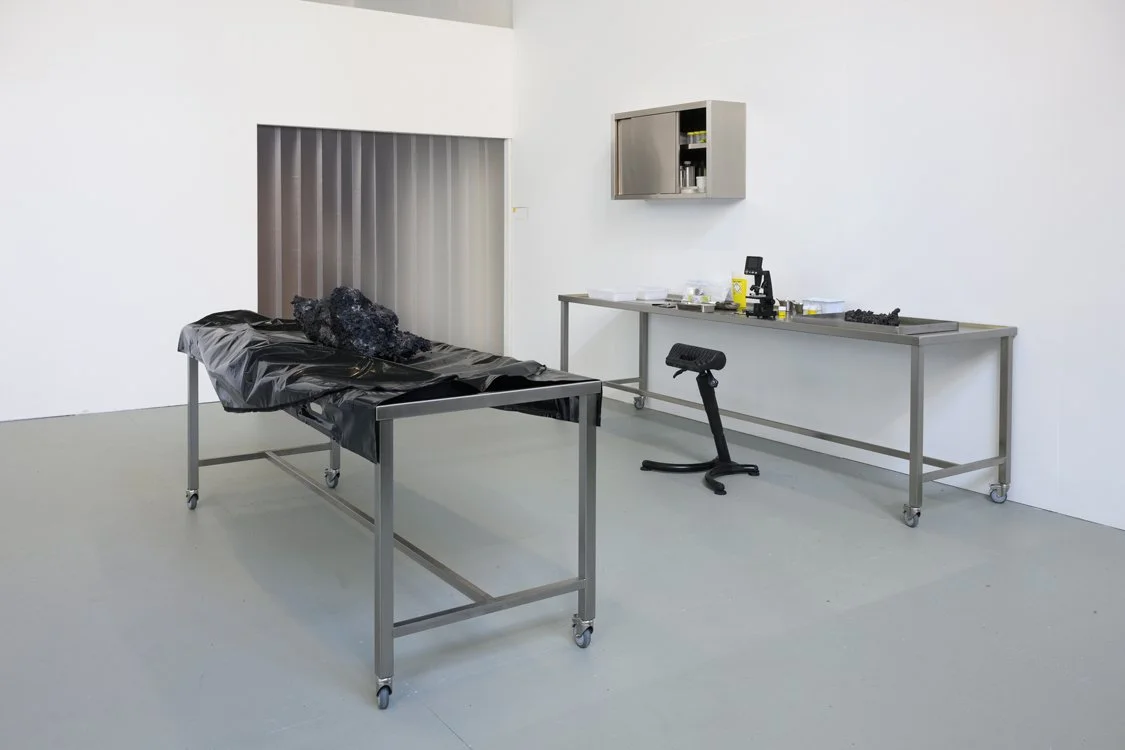
Part of the Death Trilogy, this installation investigates the liminal zone between biological life and technological failure. The work engages with Michel Foucault's concept of biopolitics, analyzing how power structures manage mortality within high-risk technological systems. It posits that in the "interzone" of fatal accidents, the distinction between the human body and the machine collapses, leaving traces of "technological violence" readable on the remains.
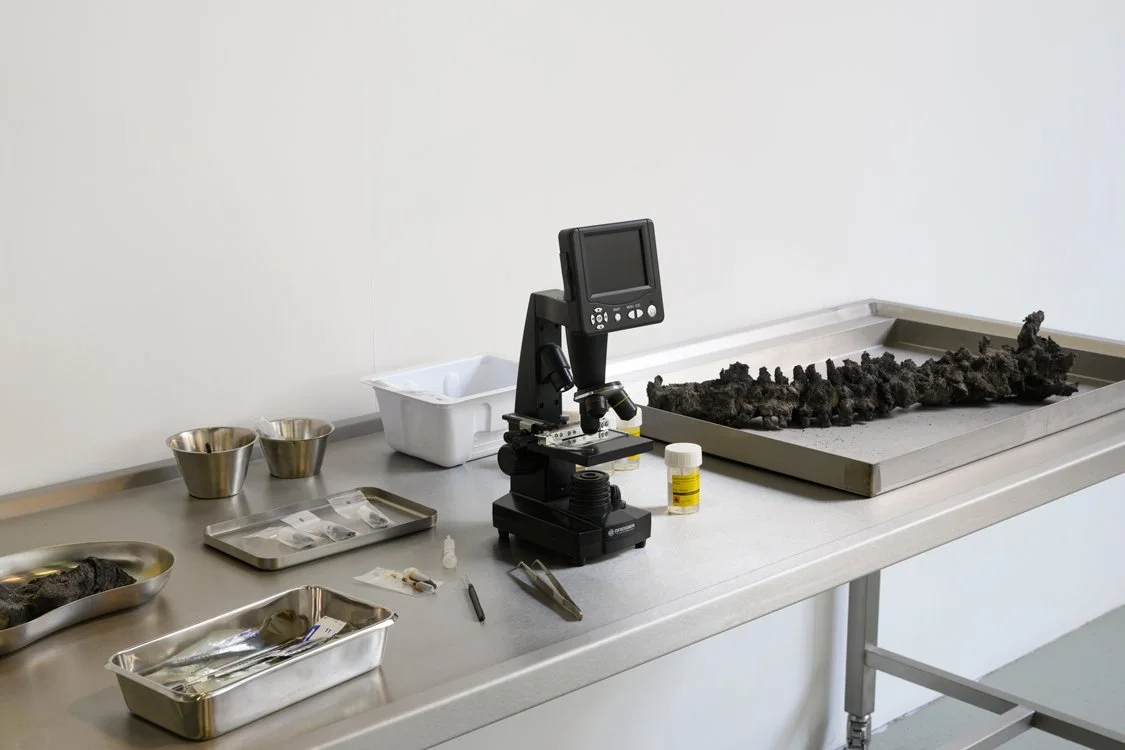
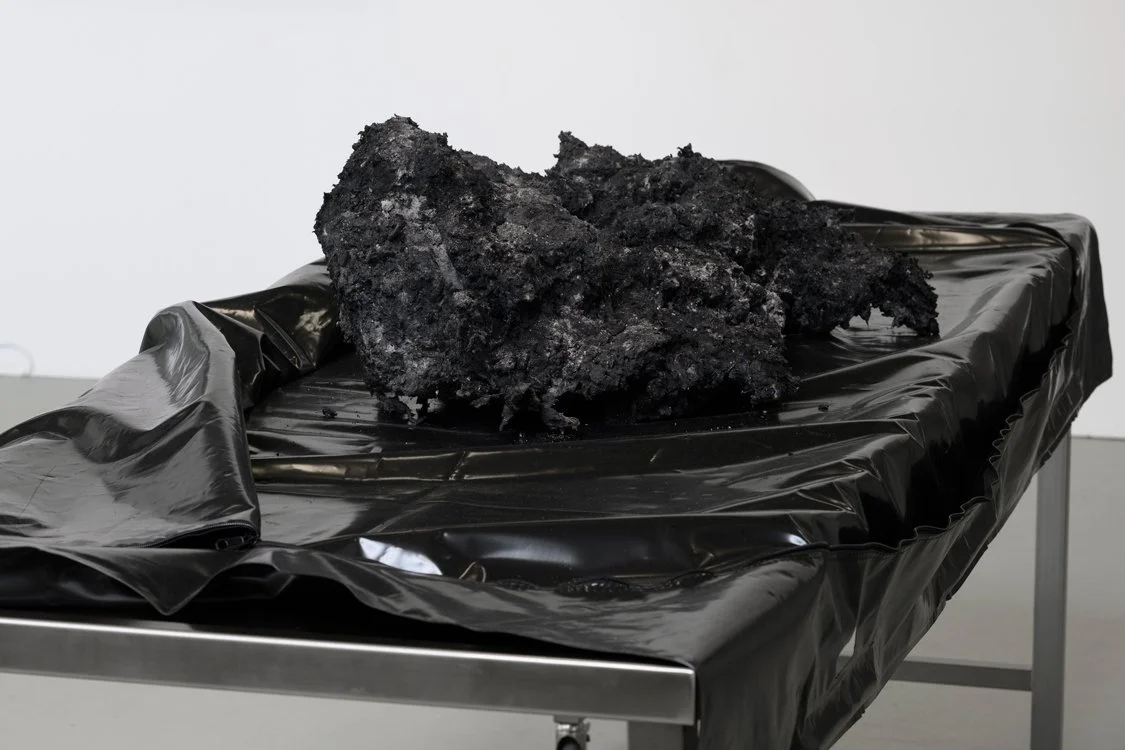
The centerpiece is a forensic reconstruction of the remains of Vladimir Komarov, the Soviet cosmonaut who died during the Soyuz 1 mission on April 24, 1967. All silicone elements are rendered in black, evoking petrified and burned flesh. This monochromatic treatment eliminates the comfort of naturalistic representation, forcing viewers to confront the material reality of thermal destruction.
The work utilizes silicone casting based on archival photographs and footage from Adam Curtis's documentary Can't Get You Out of My Head. The reconstruction addresses the phenomenon of “fiber fusion”, a forensic term describing the melting and intermingling of bodily tissues and vehicle materials under extreme thermal and kinetic force. In Komarov's case, the descent module's failure resulted in the fusion of his remains with the Soyuz capsule. Due to the lack of recognizable anatomical landmarks in the historical record, except for a fragment of the calcaneal (heel) bone, the artist introduces a fictional element: a petrified spine. This addition serves as a metaphorical anchor, representing the structural integrity required to consciously enter a known "death trap."
The work revisits the Soyuz 1 mission, where over one hundred technical flaws were documented prior to launch. Despite warnings from Yuri Gagarin regarding the vessel's safety, Komarov proceeded under the condition that his body be displayed publicly if he perished. Following a parachute failure, the capsule crashed in Kazakhstan. The official autopsy cited multiple blunt-force injuries, yet the visual reality of the "fused" remains challenges standard forensic categorization.
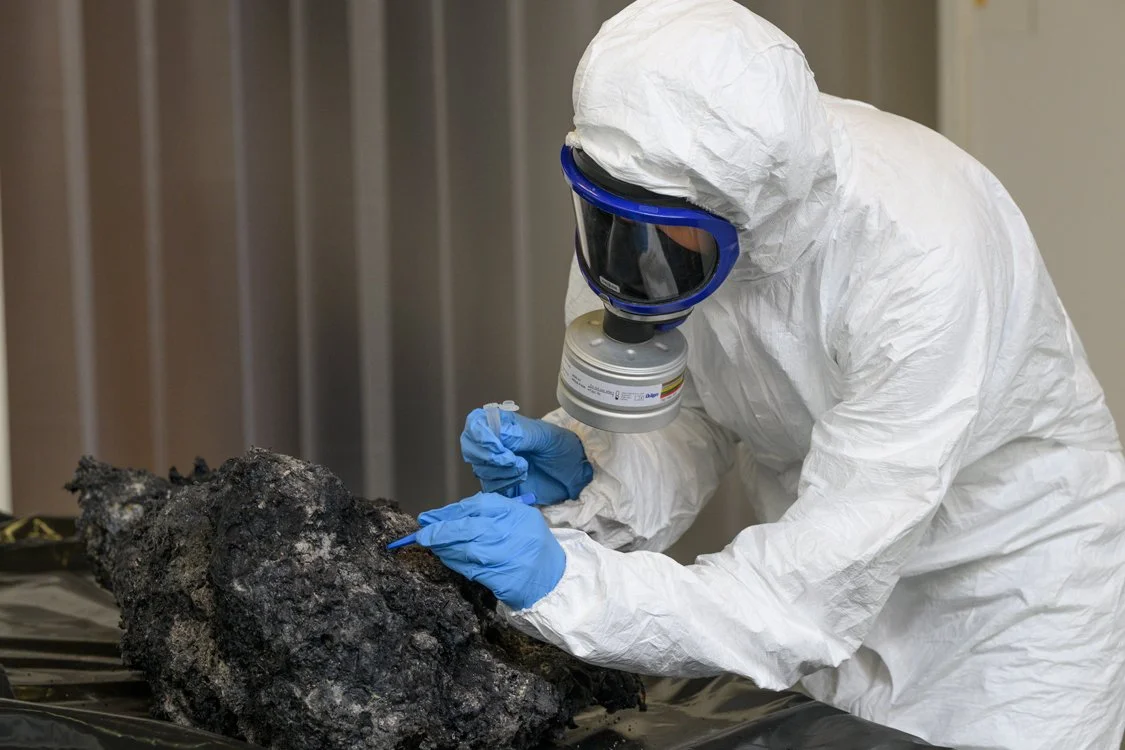
The project is informed by the artist's dual practice as a visual artist and a medical /trauma casualty actor. Drawing on simulations of military and civilian traumatology, the work simulates the forensic aftermath of technical failure. The title Death May Wait references the precarious mindset of high-risk occupations where death is a constant variable, mediated by the reliability of technological processes.
This project was made possible by the generous support of the Mondriaan Funds.
Exhibition
POST, Arnhem, NL, Someone Lives in This Body, curated by Marieke Folkers.
Konsthall C, Stockholm, SE, The New Subject - Mutating Rights and Conditions of Living Bodies, curated by TOK.
KINDL - The New Subject, Mutating Rights and Conditions of Living Bodies curated by TOK, Berlin, DE.
Year
2022, 2023, 2025-2026
Photo
Peter Cox